The Road to Peace: Global Environmental Systems Design (Building an Autonomous Decentralized Control Society)
Chairman of the World NGO Peace Ambassadors Council
Katsuyuki Kawaguchi, Chairman of the Nagasaki Council for the Promotion of the Japan-Korea Tunnel
The number of suicides increased sharply in 1998, exceeding 30,000 per year for the 14 years up to 2011, and the suicide death rate per 100,000 people (18.9 in 2015) was twice that of the United States and three times that of the United Kingdom. The atmosphere that pervaded these times was one of stagnation. Let's analyze the causes of this using intelligent design theory.
I previously compared the brain functions of men and women and proposed that we should use the power of women to create "divine creations" such as "national long-term plans." I would like to introduce a novel by Hiromi Kawakami entitled "Don't Get Carried Away by a Big Bird" (Kodansha, 2016), which supports this point. This is a full-length novel depicting the future of humanity on the brink of extinction.
Amazingly, even the disposal of spent nuclear fuel after a major nuclear accident and possible artificial intelligence have been designed, and when she published a short story about a world in which children derived from cows and rabbits are produced in factories under the premise that "human-derived cells are weak," she felt that this was a place where she could develop her thoughts on the post-earthquake period. A story was born in which evolution is pursued by obtaining new genes in order to preserve the species. The following words of the author represent women:
"Rather than going out and having adventures (men), I like to write about life inside the home. The characters in this story don't fight. They walk in the forest and feel things. Even in a world that is completely different from the present, humans still have lives." In other words, the woman's whole spirit is "Even in the face of destruction, there is life." In other words, she has the ability to stabilize any chaotic world. This is what it means. This is where it differs from Machiavelli's theory of the state and democracy (men), which begins with "You can do whatever you want as long as it doesn't cause trouble for others."
Rather than criticizing politics, economics, and ideology from a lofty perspective, the "words of pure literature (feminine sensibility)" that look at "life" with their feet on the ground gently encourage us.
-Intelligent Design (Relationship Design)
"There are 168 million children working in the world, and 200 million adults not working. Why should children have to work when there are no jobs for adults? Children work all day, while their parents suffer from unemployment. Is this right?" These are the words of Kailash Satyarthi, an Indian activist who continues to work to eliminate child labor. Isn't this a case of political and economic poverty?
In ancient Japan, there were many people like Ninomiya Kinjiro, who taught the "principle of things" and guided their children in everyday life. "Making money through financial manipulation rather than starting an industry" is Machiavellian "male logic." "Let's stop thinking like that and think and work more steadily. Women and children have a way of life even in times of destruction and crisis. In fact, it is in times of crisis that women feel they must leave descendants behind."
These are the words of women who are experiencing the "history of life" as they really are, while men are constantly repeating "giving things away" and "collecting." When men get money, they just want to wage "war."
As the Pope feared, to successfully implement the "Earth's 100-Year Plan," a period of preparation is necessary to allow it to ferment. In other words, the stabilizing ability of women, children, and young people, who will carry out the fruits of an "autonomous decentralized control society," is crucial. The political-bureaucratic community must realize Japan's great achievement of "making 100 million people middle-class." While strengthening the Earth's basic productivity, we must also strengthen human basic productivity.
As capital becomes increasingly globalized, it is only natural that regions with disparities in profits and taxes emerge. In accordance with economic principles, tax avoidance communities (companies) have recently emerged without any sense of guilt, and the ruling classes with global political and economic power are joining them. This is how the "collective intelligence" that was once a compatible combination between capitalism and liberal democracy turns into negative collective synchrony. When this "collection" function expands, the synchronizing function of autonomous decentralized control fails. This tendency toward "thorough implementation of partial functions" follows the same path as the process that led to the collapse of the "nuclear safety myth."
In a tax haven world like this, where anti-intellectualism is the source of the uneasy atmosphere, words, and actions that have begun to pervade the modern world, no one will strive to perfect their humanity. This will be the "death" of foolish humans.
Don't be fooled by the devil, Japanese corporations that only pursue "collection." The fact that large Japanese companies are increasingly being taken over by foreign capital is ultimately a failure of the policies of the Ministry of Economy, Trade and Industry, which prioritizes finance over industry. Large corporations have 354 trillion yen in reserves... We must "collaborate," not "compete," and create new things.
The way to satisfy the human desire to collect, achieve economic growth, and ensure peace is through the "cooperative development" of the most underdeveloped regions on Earth, such as Eurasia, the Heartland, or the African continent. "Money is a circulating thing." The world's richest 1% should use their money for this kind of development. This will lead to world peace and postpone the extinction of humanity. This is the lesson of Ninomiya Kinjiro's words, "For the sake of the world, for the sake of people." We must have "universality," not "thorough partial thinking."
The title is that of an Asahi Shinsho book written by Wada Hideki, with Sato Masaru as reviewer. This is an excellent "educational book" that accurately captures the movements of the Earth. It is a must-read for parents with children in elementary, middle, high school, and university. Recently, Japanese people have become cold and ruthless toward the economically disadvantaged, those who have dropped out of competitive society, and children. Japan today is facing a variety of social problems, including a high number of suicides, criticism of welfare recipients, and an increase in the number of working adults suffering from depression and addiction. I have previously mentioned that many Japanese people complain that kindergarten children's voices are "too loud" and will not allow kindergartens to be built in their neighborhoods. This was not the case in the past.
Hideki Wada analyzes that the cause of this is the American-style "personal responsibility theory." He further points out, with sharp reasoning, "Because America has a culture that tends to avoid responsibility, it was necessary to deliberately introduce the idea of personal responsibility." The artificial introduction of the idea of personal responsibility into Japan, a country with a strong sense of community, resulted in society being dismantled from within, causing the country's people to become cold-hearted. He warns that if this situation continues, Japan will continue to sink further. The child poverty rate is particularly severe, at 16.3%, even critically so, especially in the area of education. Compared to other countries, unemployment insurance and welfare benefits are low, and Japan's systems for raising children and for those who can no longer work are woefully underdeveloped. Despite this, Japan has managed to survive thanks to the strong emphasis on welfare, primarily by large corporations, during the period of rapid economic growth. Companies have covered the cost of children's education through a seniority-based wage system. If we are to abolish the seniority-based system, then of course the government should cover the cost of education (which is the lowest among developed countries), but the government refuses to accept this obligation in the name of personal responsibility.
During the Japanese growing up period, most mothers and grandparents stayed at home to raise their children and cultivate their social skills. This was a distinctive social structure in Japan that differed from that of the West. It was this that made Japan a top-class country. However, times have changed, and women have come to the point where they need to go out and work in order to survive. What happens to the children?
"Personal responsibility" is also an imitation of the American concept, and Japanese people have always had a strong sense of community. The flip side of "doing things for the world and for others" is that we have lived our lives causing trouble and being troubled by others. Not causing trouble is neither noble nor righteous. Let's bring back the "spirituality" of old Japan. Just because you fail, you should not commit suicide.
"Imagine the swarm behavior (group synchronization) of ants, bees, and birds. Then, get into the habit of making your own judgments based on facts. Then you will succeed. As shown in Figure 9.1, let's create a new Japanese culture that transcends the US and Europe. This can be called the spirit of mono no aware."
The birth of President Trump marks the end of American internationalism, a tradition that dates back to the 20th century. The number of "poor whites" and their poverty rates now exceed even those of Asian Americans. Some say this is due to job outflows and immigration caused by globalization, but the real problem is the "bloated money game" of neoliberal policies. Japan has lagged behind in following the US's economic policies until now. This is a good opportunity. Japan should also flexibly shift its policies. This is a quiet departure from neoliberalism. The country will then be successful.
"The reason for Japan's failure is that it set aside its own values and pandered to the United States and Europe."
What is causing these "structural changes" occurring in all countries of the world, not only in the US and the UK, but also in the Duterte administration in the Philippines and the protest movements emerging in South Korea? Could it be a political backlash (backlash phenomenon) against the massive monetary easing measures taken by developed countries after the "economic upheaval"? This can be expressed in terms of the "collective intelligence" that is inherent in the collection of biological systems.
"Only those who understand the true nature of a complex world are allowed to simplify the central facts," is what Masataka Kosaka said, and I agree. As can be seen in the "Trump phenomenon," it is true that "there has never been a greater distance between words and the complexity of the situation they are trying to express than in our modern age." Expressed in terms of emotional technology, complex adaptive systems are a methodology for understanding things as they are (intelligent design theory), and therefore have optimal adaptability depending on the situation.
Where does this sense of stagnation around the world come from? Financial markets easily cross borders, inequality and poverty are expanding globally, and individual morality and national independence are being shaken. A lingering fear that all events will reach a scale beyond their threshold and eventually lead to destruction lingers in the back of our minds. Anxiety and hatred build walls, while peace builds bridges. The West Bank Wall and the Japan-Korea Tunnel are emblematic examples. We live in an age of globalization where differences are no longer apparent. However, the word globalization is losing its value as a slogan. A society that pursues economy, rationality, and efficiency has united the world. In that world, life itself disappears. Dentsu, which has been criticized for the suicide of a female new employee due to overwork, has been recognized by the Ministry of Health, Labor, and Welfare as a "childcare-supporting company" with a comfortable working environment. This is bureaucracy. The same crops and products can be produced equally by anyone. As Takeshi Yoroi said, I don't want to waste my life doing that either.
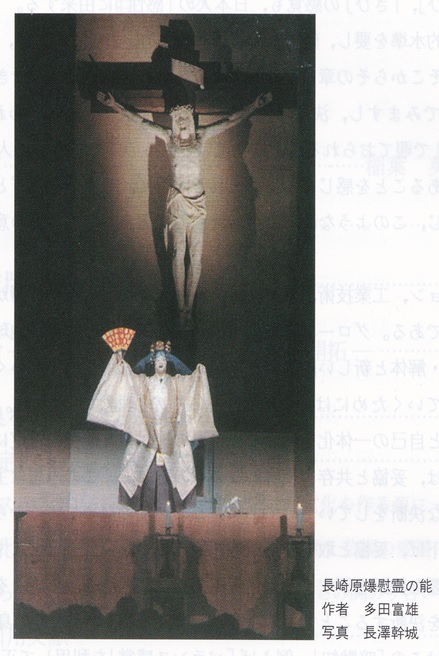
Figure 9.1 The devil may quote the Bible for his own purposes.
(Shakespeare)
Don't be fooled by the devil, the corporate entity that only pursues "collection."
America's success was not due to technology, but to management. Japan established the term "engineering," which combines science and technology. The character "工" in "工業" (engineering) means "a shape that supports the heavens."
From "Research into the Expression of Human Inner Sensibility"