The Road to Peace: Global Environmental Systems Design (Building an Autonomous Decentralized Control Society)
Chairman of the World NGO Peace Ambassadors Council
Katsuyuki Kawaguchi, Chairman of the Nagasaki Council for the Promotion of the Japan-Korea Tunnel
Rather than perceiving events and phenomena by getting caught up in them, there is a way to view them from a higher level and process them. Consciousness has no scientific or technological definition. Collective intelligence is the fullest use of consciousness. It gives us hints that allow us to see the unknown. This is because all "things" have a hierarchical structure, as shown in Figure 5.1 Reorganization of consciousness - a hierarchical structure seen from the unifying principle of religion, science, and art. Cells cannot understand each other, and their functions cannot be understood except by the "organs" that cells make up.
The Ministry of Economy, Trade and Industry (METI) and shareholders continue to demand a minimum ROE of 8%. An intelligent designer of optimal design would understand this immediately, but in an era of zero interest rates, it is essentially impossible to achieve a high ROE alone. Since profits are only a part of overall economic growth, it can only be achieved by taking various measures, such as lowering wages and increasing the number of non-regular employees.
Increasing profits by 8% in a time of zero or negative interest rates means cutting labor costs. This leaves managers unable to sleep at night. While the US's global policy is at a standstill, Japan, which is one step behind, is calling for "human resources that can adapt to globalization," according to the Ministry of Education, Culture, Sports, Science and Technology. However, in an attempt to halt the decline, neoliberals started globalization.
However, since peaking just before the Great Economic Crisis, collections (of people, goods, and money) have begun to shrink. International capital flowing into the United States is now one-third of its peak (2007). If the United States can no longer attract economic surpluses, it is only natural that it will adopt protectionist policies.
And yet, METI's policy is to "act as a pawn of the financial economy rather than industry." They pretend not to notice the spread of distributed energy, and insist that nuclear power generation should continue because it is baseload power generation. However, in reality, the availability rate that determines the mission of nuclear power generation is 63%, while the global average for nuclear power generation is over 80%, and Monju was decommissioned without operation, making Japan's nuclear power generation rate the "lowest." Needless to say, in earthquake-prone Japan, this availability rate could fall even further. Furthermore, according to Makoto Iokibe, the present day is a "national crisis"—an "age of major disasters"—just like the "Mongol invasions."
Currently, "child poverty" and "children's abandonment of science and technology" are spreading in Japan, and this is a major national issue. The issue that America has succeeded in is not "technological development" but "management." They created a system where they made their own plans and outsourced all production to foreign countries where it could be done cheaply. However, the globalized financial economy caused a major economic depression. The Ministry of Economy, Trade and Industry must not become like America.
Japan should follow Germany's example, not America's. Germany is unwavering. It has stopped dangerous nuclear power generation and is designing an autonomous, decentralized society with distributed energy. The Fourth Industrial Revolution (thinking factories) is about to begin in Germany. The Ministry of Economy, Trade and Industry should set aside its "money-collection" policy and pursue the construction of a unique economic frontier, the path to peace, and the theory of global environmental system design. "Young people" with their volunteer and entrepreneurial spirit will gladly follow suit.
If Japan continues to spend twice its annual tax revenue and borrow the remaining amount, economic chaos will occur that will wipe out its postwar prosperity. Of course, if we are going to raise taxes, taxing financial assets, strengthening inheritance taxes, or strengthening international crackdowns on tax havens would be better than raising the regressive consumption tax. However, a 10% consumption tax is not high compared to Western countries. Since this tax increase will be used to fund ever-increasing healthcare and welfare costs, sooner or later everyone will benefit.
However, there are many voices saying that the previous tax increase in 2014 reduced personal consumption and ruined the results of Abenomics.
Is this really the case? Making one's own judgment based on facts is the concept of intelligent design, so let's examine it using Kosuke Motani's methodology. To avoid the effects of last-minute demand or a rebound decline, we compare the period from October 2012 to September 2013, when Abenomics was launched, with the periods from October 2013 to September 2014 and October 2014 to September 2015, which sandwich the consumption tax hike. During this period, the Nikkei average continued to rise by approximately 3,000 to 5,000 yen per year, but personal consumption figures were up 1.3%, 0.0%, and -2.0%, respectively, year-on-year. The consumption tax hike caused a serious decline in consumption more than six months after the hike. Why didn't personal consumption bottom out, even though the earnings of listed companies were improving over time?
"The real cause of the slump in consumption is demographic changes unrelated to the tax hike." As the large population born in the 1950s retired and were replaced by younger people with lower salaries, total employee compensation stagnated and total consumption fell. At the same time, the baby boomers working for large companies retired, and the number of people working in welfare and nursing care, whose salaries have been nearly halved, has had a compounding effect.
What's interesting is that if the tax had been increased, one would have expected a new surge in demand of +1.3% (group synchronization) as a result, but this has not happened either. If they are unable to recognize the flaws in the economic theory (reflationary theory) that they have come to believe in, then who will they blame in the future?
In this way, we can see that the phenomena of a complex society are closer to God's judgment when viewed as collective intelligence based on complex adaptive systems as they are, that is, the synchronicity of groups.
To address the slump in personal consumption, we need to increase wages for young people, who have the potential to consume, while at the same time eliminating the inequality that causes corruption. Restoring the middle class through the "100 million middle class" initiative will boost domestic demand. Furthermore, when dealing with important issues, they will be able to make fact-based, common-sense decisions. A rebuilt "100 million middle class" will be able to make smarter decisions, which will become the potential to correct the series of failures in the country's major projects to date.
So far, we have used concrete examples to demonstrate that collective intelligence (group synchronicity) is one level higher than specialized knowledge, but let's take a look at some of the cutting-edge research and development in this field.
The most interesting applications of online collective intelligence are in areas where there are no objective evaluation criteria, and it is useful for intelligent design of phenomena where there are no correct answers.
"Open Science" is gaining attention as a new form of "knowledge" for the 21st century. This involves ordinary people (amateur citizens) participating in cutting-edge research and development in science and technology via the Internet. The current situation is vividly described as the "Open Science Revolution" by Michael Nielsen (Kinokuniya Shoten, 2013). "Open Science" is a pure and free research activity that allows "ordinary people" to participate, unrelated to the interests of large organizations, and is one of the most representative applications of online collective intelligence. To achieve this, accurate analysis and decomposition of the problem and the establishment of easy-to-understand objective evaluation criteria (such as minimizing energy consumption) are prerequisites.
This method involves breaking down a problem (a rugby term referring to the handling of the ball during a scrum) until an individual's objective evaluation criteria are established, and ultimately determining which of the eight million gods would win. This is the same as the "optimal design theory" used in Japan. Physicists stop counting money on Wall Street and instead improve themselves with this new way of thinking and carry out their policies. Finland is an amazing country that is implementing this.
According to Professor Saito Tamaki of the University of Tsukuba, "Open Dialogue" (Jaakko Seitzkla and Tom Erik Arnkill, Nippon Hyoronsha) is a therapeutic intervention technique for mental disorders that has been developed and practiced in Finland since the 1980s. It has achieved extremely good treatment outcomes with almost no need for drug treatment or hospitalization, and has attracted attention worldwide. The results of psychiatric care using Open Dialogue (OD), which can be described as "collective intelligence" or "group synchronicity," have been remarkable. In a five-year follow-up study, only 17% of patients continued to take their medication (versus 75% of the control group receiving conventional treatment), and 19% received disability pensions (versus 62% of the control group receiving conventional treatment).
The technology is surprisingly simple: A treatment team visits patients in their homes, sometimes daily.
This dialogue is not just a dialogue. Open dialogue does not persuade patients. "We do not aim to get better. We simply think about connecting high-quality dialogue. Through dialogue, diverse voices mingle, perspectives are connected, and painful experiences are shared. Then, as if it were a by-product of this process, treatment is brought about."
Professor Tom Arnkill of the Finnish National Institute of Health and Welfare is the founder of the "Aiming at a Future Dialogue (AD)" technique, and is developing a technique for support staff. In the field of support, collaboration between multiple specialized fields, such as medical care, health prevention, and education, is necessary. However, in the field of government, collaboration often does not work well due to vertical divisions. AD is a groundbreaking technique that encourages collaboration between multiple professions in such cases.
Participants include multiple supporters, support recipients and their associates, and one external pair leader. They ask all participants to imagine a situation in the near future, one year from now, where all real-life problems have been solved. They place themselves in that future time and "remember" the situation one year ago, i.e., the present. What went well in resolving the problem? Who helped them? They are asked to "remember" each of these aspects one by one.
Discussions about "who should do what" can easily become complicated due to differences in each person's position and interests. However, once the problem is broken down through the above thought process and associative thinking, it can be handled within each individual's area of responsibility. All that remains is to determine the allocation of roles and responsibilities, and create an implementation plan diagram. This is the same methodology discussed in "How to Look at Things (III)" by Katsuyuki Kawaguchi, World Peace Studies. The technique of "recalling" the present from the near future, due to its indirect nature, encourages emotional techniques and associative relationships, and also facilitates stability of thinking and group synchronization through the complex interplay between diverse professions. Furthermore, trainees are not persuaded; they are expected to "realize" the concept naturally.
This is exactly what is applied to the educational methods in Finnish schools, and it is perhaps this that allows children to have the shortest class time yet still achieve the best academic results in the world.
The mainstream of modern psychiatric care is based on biological theory, centered on drug treatment. The reviewer, Tamaki Saito, also asserts that the practice of OD and AD presents a significant claim to the restoration of the relationship between "human beings" and "words," "subjects" and "narratives." This is nothing other than a "revival of spirituality" among all Japanese people, or in other words, a "revival" of "group synchronicity" through collective intelligence.
Finding such a goal itself is a key feature of collective intelligence. In the case of encyclopedias or software development, the goal to be achieved is given from outside, but in the case of Nico Nico Douga (a video sharing site typified by YouTube), creating a new video is born within the collective intelligence process. Figure 10.1 shows some of the relationships in this creative act. The circles represent videos, and the lines represent their use and participation. The size of the circles indicates the number of references from others, and the shade of the circles represents different types of creative acts. As can be seen from this diagram, the relationships vary widely.
By watching videos, participants are motivated to create new videos, which they then create and post. As more people become interested in related videos, more related videos are created, resulting in a complex, large-scale video network like the one shown in the figure. There is no predetermined goal for what kind of video to create; rather, videos are created as a result of the action of collective intelligence and group synchronicity. In other words, it can be said to be autonomous or emergent collective intelligence. Participants are highly diverse, ranging from professionals to amateurs, and maintain their independence from one another. Its characteristic is its decentralization, and one video can be connected to generate a large number of videos on a large scale.
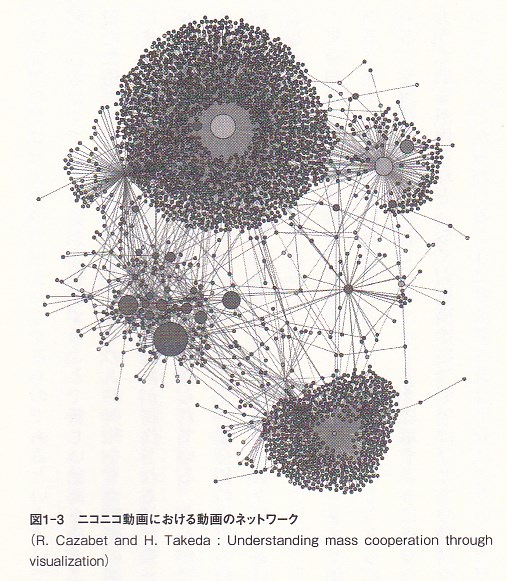
Figure 10.1 A video network expressing "group synchronicity" through collective intelligence (Takeda, 2015)
This kind of self-organizing, emergent collaboration is also being developed in the academic world. Groups synchronize and collaborate through the citation and referencing of academic papers. As a collection of these, academia is an emergent collective intelligence that determines its own direction. The brain's information processing system also behaves in exactly the same way, demonstrating the same world of "autonomous decentralized control" as the world of Nico Nico Douga's production and development.
In this way, the Internet has enabled a wider range of people to participate, which will greatly contribute to the development of "Global Environmental Systems Design" and further academic research. Figure 10.2 shows again the characteristics of the brain's information processing system, which creates this kind of "autonomous decentralized control."
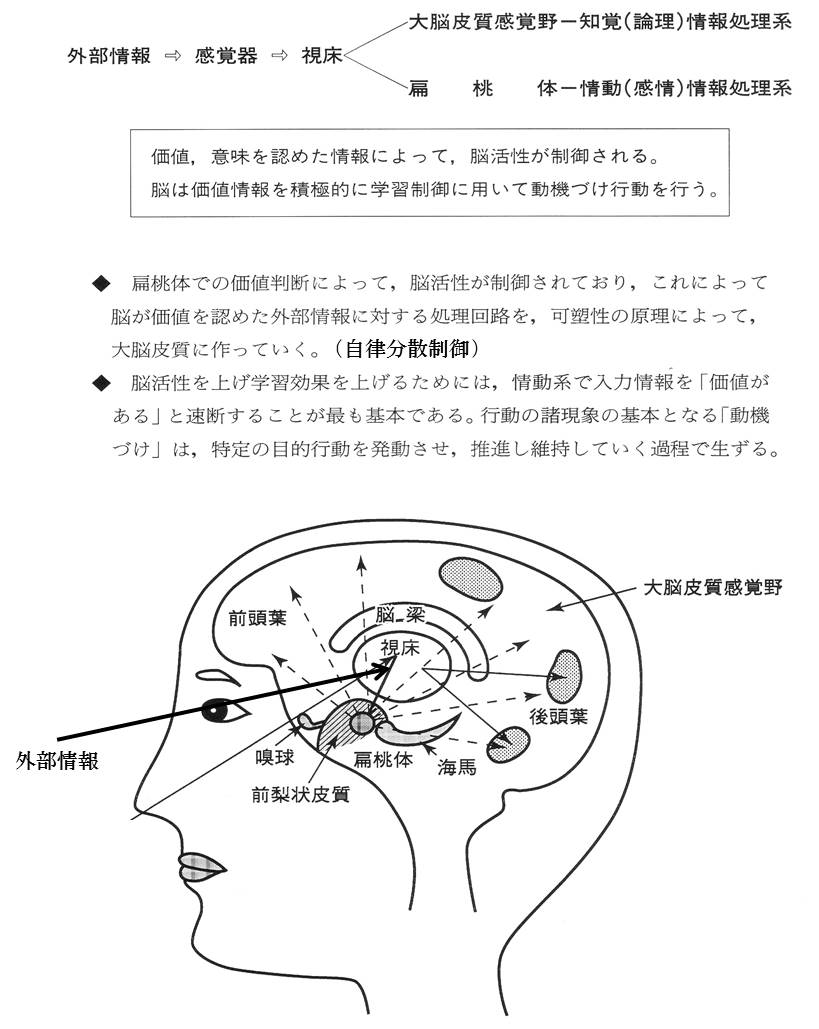
Figure 10.2 Characteristics of the brain's autonomous decentralized control system: Learning control based on emotional (feeling) information
From "Research into the Expression of Human Inner Sensibility"