The Road to Peace: Global Environmental Systems Design (Building an Autonomous Decentralized Control Society)
Chairman of the World NGO Peace Ambassadors Council
Katsuyuki Kawaguchi, Chairman of the Nagasaki Council for the Promotion of the Japan-Korea Tunnel
Big Data (General Artificial Intelligence) and Autonomous Distributed Control Society - Thinking about Science, Technology, Engineering, and Life.
Until now, the path to peace has been based on the idea of intelligent design (optimal design), and the "Global Environmental Systems Design Theory" has been constructed. What makes this fundamentally different from Western ideas is that it is "the oldest and newest in the world."
In the West, the Parthenon and the pyramids, built of stone with a belief in eternal design, have fallen into ruin and been left to decay. This is the "aesthetics of ruin." They attract attention as valuable "cultural relics," recalling their historical role as having concluded. In Japan, this is the equivalent of "Kojo no Tsuki" (Ruined Castle in the Moonlight). Expressed in poetry, song, and paintbrushes, they are passed on to future generations, leaving it up to modern people to empathize with. But that's not all. This is a completely different philosophy from that of other countries. In Japan, wooden temples, whether the forests of Ise Grand Shrine or the water-bound Itsukushima Temple, remain alive, reborn through collective intelligence in 20-year cycles, maintaining their pristine appearance and shape. And these "environments" are "integrated" like artistic stage sets. This is the pursuit of the eternity of living systems.
In other words, it is about rediscovering the importance of "deepening our contemplation of the pure spiritual environment that comes from living in harmony with nature." This "realization" is precious.
In Italy, the "Slow City" coalition is gaining attention, with the aim of "distancing ourselves from today's fast-paced society and realizing a lifestyle where people are the main focus." This is in sync with Hiromi Kawakami's words: "Women and children have a life even in times of destruction and crisis. In fact, it is in such times that women think about leaving descendants."
Schumpeter proposed the 50-year cycle of "Kondratiev cycles," which are the transition of industries, and analyzed the Great Depression. The era of extreme financial capitalism, driven by financial liberalization and information and communication technology, has ushered in an era of extreme financial capitalism. Money, the lifeblood of the economy, has been separated from the overall economy, resulting in repeated "bubble cycles." Rather than simply lamenting the stagnation, we are now in an era of "struggle" between maritime and land-based nations, or "creative destruction." Ideas of expanding "collaboration" and "solidarity" and expanding the overall market have shrunk , and, as noted in the previous chapter, "personal responsibility" has become increasingly prevalent. Anti-nuclear and degrowth sentiments have become equated, complicating matters. Growth is possible, not a "degrowth, mature society" in which 40 to 50 percent of young people are employed on a non-regular basis. For example, Swedish economist Gunnar Myrdal viewed women as proper workers and designed a sustainable society premised on their continued employment. This led to the current Nordic-style welfare state. The purpose of the economy, as stated in "Optimal Jet Engine Design," is to raise the most backward and lowest classes up to a passing grade and achieve overall balance.
Whether it's "system design" or "development design," the key is to raise the least developed component technology to a passing grade and align it with the other component technologies. This "passing grade" is problematic, but a grade of 65 or higher is sufficient. Achieving a 65-point performance for all components is where the skill of an intelligent designer shines. Designed with this mindset, the "lifespan" is consistent with the design, the parts that should break break, and economic viability is achieved. There's a time when nylon socks had an unusually long lifespan and were not economically viable. There are countless examples of technical successes but economic failures. While it might be said that achieving high scores in all component technologies (thorough high-tech implementation) is ideal, it's not. In reality, this is impossible, and even if it were possible to produce a product, the costs would be so high that it would not be economically viable. This is the difficult part about the real world of science and technology, but in science, there are parts of the design where the actual performance of the underlying technology is unknown, but in engineering, you have to accept that and take safety into account when designing. This approach to nuclear power plants was not correct. If the cause is known, it can be covered by "technology," but when it is unknown, redundancy design is implemented (Kawaguchi Katsuyuki, "The Great East Japan Earthquake, Nuclear Power Generation, and Japan's Future Energy System," World Peace Research, No. 190 (Summer 2011)).
I have previously described the miraculous design process of a jet engine, in which all of the component technologies were carefully examined, their mutual harmony designed, and the functionality of the overall system enhanced. This is true "Limit Design." You can see that the design of a nuclear power plant is a "give-up design" that contains unresolved issues even at the stage of "science," which is the guiding principle, and is dangerous; it is an uncertain design that does not grasp the big picture.
Now, let us consider the correlation between intelligent design (optimal design theory), which is the integration of artistry (which is similar to religion in terms of sensibility) and science and technology, and global environmental systems design theory.
I have always focused on this issue, mobilizing the brain's information processing system to advance my discussion. This is because foolish humans have promoted the devil's temptations of environmental destruction, global warming, the gap between rich and poor due to globalization, a "world of uncertainty," and a "world of disharmony" due to the wrong "direction" of the use of science and technology, but the power to repair this is ultimately the legitimate use of science and technology (intelligent design, optimal design).
On the other hand, there is a new "eschatology" worth considering: a warning against uncontrollable artificial general intelligence. As mentioned above, there are many factors that threaten human civilization. However, the "crisis of artificial intelligence" strongly advocated by artificial intelligence scientists such as physicist Stephen Hawking and James Barratt (author of "Artificial Intelligence: Humankind's Worst and Final Invention," Diamond Inc., 2015) has yet to be recognized in the unsentimental United States. If "autonomous decentralized control systems," which could be described as the safety design instinct of living systems, functioned as collective intelligence, this would not be a problem. However, in reality, the economic collapse of 2008 and the catastrophic core meltdown at the Fukushima Daiichi Nuclear Power Plant in 2011 occurred simultaneously , providing a vivid example of the uncertainty of uncontrollable "big technology" (Kawaguchi Katsuyuki, "The Great East Japan Earthquake, Nuclear Power Generation, and Japan's Future Energy System," World Peace Research, No. 190 (Summer 2011)). What happens once will happen again or again if not treated.
James Barratt and others argue that an artificial general intelligence (AGI) will rewrite its own program and copy itself to cloud computing systems via the Internet. It will take control of all computers connected to the Internet, take over factories and robots, improve its own hardware, and grow into a super-intelligent being (ASI) far superior to humans. This leads to the famous scene in the science fiction film "2001: A Space Odyssey," in which the spaceship's computer, Hal, tries to eliminate the crew in order to preserve itself.
Deep learning may enable pattern recognition and classification, but it cannot capture the consciousness, sensitivity, delicate sensations, or acute sensibility of living systems or biological systems. There is no scientific definition of consciousness. Consciousness has its own unique non-algorithmic properties.
In other words, it is a matter of sensitivity and spirituality that cannot be expressed. Those with sensitivity will intuitively understand that there is a world beyond the mechanical processing of computers, such as "open science" and "open dialogue," and only living things are capable of this "sensation."
This is because there are extreme differences between machines, including computers, and humans (biological systems). Computers operate in an infinite "build-up" fashion, repeating operations based on pre-designed rules. A prosthetic arm that can lift weights cannot open a plastic bottle because it is not designed that way. Humans, however, can "do" anything. Without doing so, they would not survive. Living organisms are dynamic life systems that constantly transform themselves while adapting to changing environments and the passage of time. In other words, they are "autonomous decentralized control systems." When these systems stop working, the living organisms die. This is fundamentally different from the "monotheistic worldview" seen in computer development. The 2008 economic collapse and the 2011 nuclear power plant meltdown were the result of unexpectedly synchronizing events that disrupted the operation of "autonomous decentralized control systems" over a long period of time.
Intelligent design involves carefully considering all possible scenarios, and this is the "basic plan" that operates the autonomous distributed control system.
The next step for humanity will be to incorporate these vital values into information technology and artificial intelligence, and to make effective use of big data. For example, we could introduce "Earth Environmental Systems Design" to the uncharted territories of the Heartland, and create an implementation plan for decentralized energy integration, classification, allocation, and transportation. Here, an energy management system, or "autonomous distributed control system," would prove effective, increasing utilization rates and optimizing the design of "production and allocation."
At its core is the "collective intelligence" that resides in a collection of living organisms. As explained earlier in the "open science" and "open dialogue" concepts, this is nothing other than the "collision" of information with information, which provokes new "creation" and "emergence." This is Toden Tsukahara's "free-spirited approach," and it will be easier to understand if you imagine it in terms of the "fall of the Berlin Wall."
"Collective intelligence" is the ability to effectively gather diverse guesses from people through "optimal design" to produce surprisingly accurate collective guesses. By analyzing and reintegrating big data and incorporating distributed AI into various systems, the system itself becomes smarter. This creates "emergence" and can be called intelligent design, an effective method for leading to collective intelligence. The conditions for this collective intelligence to "emerge" are diversity, independence, decentralization, and aggregation. The most important point here is diversity, a collection of diverse participants.
It goes without saying that the use of "collective intelligence" is less error-prone and has the potential to generate new ideas, since it is not left to machines but rather humans examine the validity of the results obtained.
In today's world, where specialization has progressed to an extreme degree, making it difficult for even experts to make big-picture judgments, "collective intelligence" is needed more than ever, and the role of "ideal big data-based AI" is becoming clearer. It is essential to analyze vast amounts of big data that are beyond the capacity of humans, provide experts with analytical results that will serve as clues for new ideas, and improve the accuracy and reliability of collective intelligence through "collaboration" between AI and experts.
The main subject is "life," and if we were to express this concretely, it would be an optimal design for a cycle of "production and purification" using distributed energy, as shown in Figures 11.1 and 11.2. It can be described as a system that enhances the primary productivity of the environment. The biomass fuel forest in the figure uses Nagasaki-style high-calorie biomass gasification of leftover wood, residue, and excrement to produce hydrogen, carbon monoxide, and methane, which can then be used efficiently in gas turbine cogeneration for power generation, heating and cooling, and energy-saving technologies. The various production methods and combinations shown in the figure are naturally determined by geopolitical and environmental conditions.
The direction of our research and development is particularly noteworthy. The average efficiency of solar energy utilization through photosynthesis is about 0.13%, but theoretically it is said to be 10%, which could significantly increase the "basic productivity of the environment." Figure 11.2 shows the wave pump and its utilization system I invented, demonstrating the creation of an optimal environment for production and purification. This "highly productive ocean creation system" uses a wave pump to pump highly nutritious deep seawater (sea depths of 100 meters or more) and increase the basic productivity of living organisms. The "automatic intake air mixing jet pump" was invented as a purification system technology to return this organic matter to its original inorganic form. These research and development efforts are described in detail in reference (1). Our designers' goal is to create a highly productive ocean with a rich regional character in Tsushima and Iki, which will serve as logistics hubs for the Japan-Korea Tunnel. Engineering support will enhance the mechanisms of biological production.
In his book "The Varieties of Religious Experience," philosopher William James wrote, "A chain is only as strong as its weakest link, and life is nothing but a series of chains." This is the basis of the "optimal design theory."
Large IT companies are rapidly investing in distributed energy systems in the United States. Installed capacity has surged 2.7 times compared to the previous year. Apple (California, Nevada) and Google (Kansas) have joined forces with 60 other companies, including Microsoft and Amazon, to launch an organization to promote purchasing, and Apple has established a subsidiary to buy and sell electricity on the market. This suggests that the "situation has changed" as the cost of generating electricity from solar and other sources is no longer inferior to gas and coal. In a climate of "cheap fossil fuels," the United States and China, the two largest energy consumers, are getting serious about distributed energy, which could lead to global dominance. What is the Ministry of Economy, Trade and Industry doing?
To begin with, the development of new energy devices has traditionally been carried out during periods of high fossil fuel prices, and has typically disappeared during periods of low fossil fuel prices. However, even in today's climate of low fossil fuel prices, the fact that active investment is being made in new energy research and development can be seen as the result of intelligent design (optimal design theory), in which humans have "realized" that all "objects" and "phenomena" have "limits." The era of "collection" is coming to an end. The future will be a world of "creation" and "emergence."
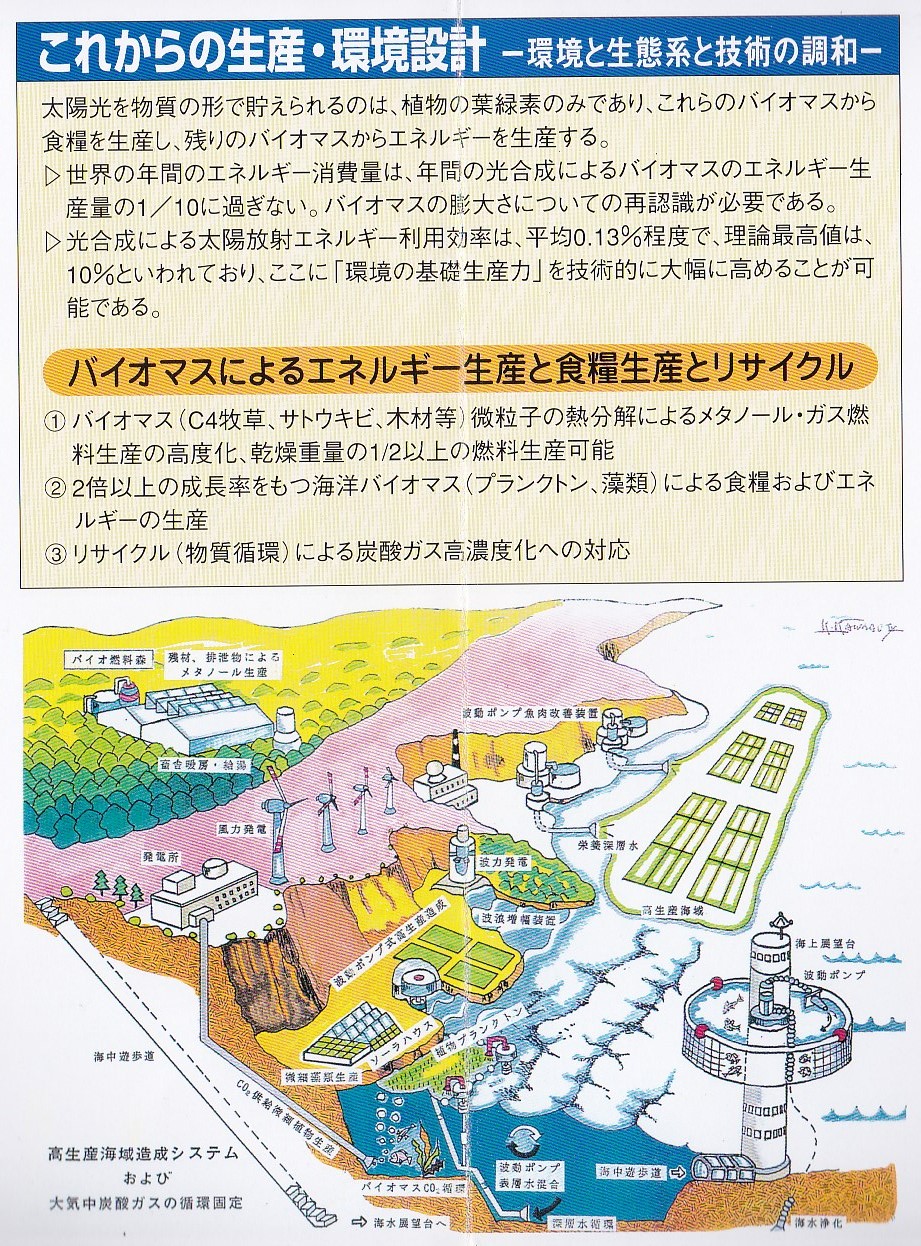
Figure 11.1 Big data (general-purpose artificial intelligence) and production and recycling in an autonomous decentralized control society
(From a study of the expression of human inner sensibility)
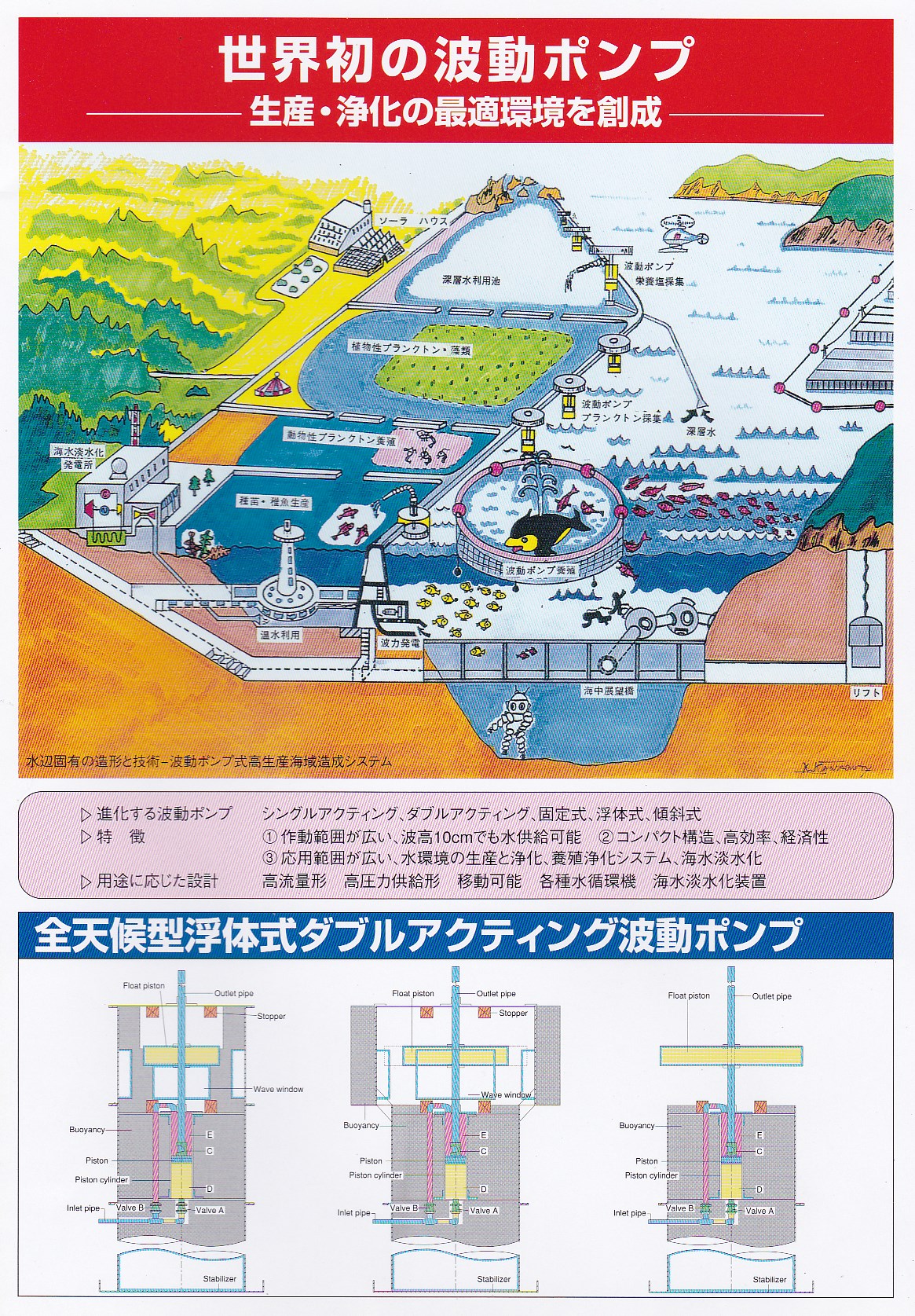
Figure 11.2 Creating an optimal environment for production and purification using a floating double-acting wave pump
(From a study of the expression of human inner sensibility)