Chairman of the World NGO Peace Ambassadors Council,
Chairman of the Nagasaki Council for the Promotion of the Japan-Korea Tunnel, Katsuyuki Kawaguchi
If the government truly seeks economic growth, it should build a "Japan-Korea Tunnel" to bridge the maritime and land-based nations and connect them to the Eurasian continent and the heartland economic sphere. It's said that Africa is the final economic frontier of capitalism, and China, as expected, is quick with its diplomacy to scoop up its resources. However, the African continent has a population of around one billion, and there are uncertainties. This is because the heartland is the last economic frontier on Earth.
The "nation's long-term plan" will be carried out in an autonomous, decentralized manner (the brain's information processing system is this). Rather than extending existing technology, it is essential to carry out "optimal design" that looks at the entire system as the case may be. The "action implementation diagram" must be one that excites young people in particular and gives them hope for the future. This is because young people have "innocence" and the ability to absorb anything and improve themselves. To achieve this, we must first work with women to build national strength.
Political and economic measures include aiming for a "100 million middle class" at Japan's peak. This is because ordinary Japanese people are said to be intelligent. The common sense and intuitive judgment of the middle class can exert great power through collective synchronization. This will lead to an appropriate cycle of "productivity and consumption" in "domestic demand." First, the foundation must be created, so it will take more than 100 years. We can think of this as being the same period as the destruction of the Earth so far. The key is to change our perspective and awareness when building "things" and systems. A desire for universality. In other words, it is the teaching of Ninomiya Kinjiro: "devote yourself to the world and to people."
The bottlenecks in forming a global land route network are the construction of tunnels across the Bering Strait and the Japan-Korea Strait. Modern science and technology in the 21st century has advanced to a level where the construction of the Bering Strait and the Japan-Korea Tunnels is no longer an issue.
What about construction and manufacturing costs? Theoretically, an amount that would prevent countries from going to war could be used to promote a world peace project. However, as globalization progresses, economies shrink, and disparities widen, wouldn't it be better for developed countries to share the construction costs of the final frontier of the capitalist economy in order to improve the compatibility between democracy and capitalism? The 21st century should be about collaboration, not competition.
Over the past three years, the United States has poured a whopping $200 billion (approximately 20 trillion yen) into the Iraq War. Even if both tunnels were opened, there would still be money left over. In the Vietnam War, several times that amount was spent on "murder" and "burning earth," both of which were justified in preserving democracy. Building two million-kilowatt nuclear plants would cost more than 1 trillion yen. If we could cover the costs with distributed energy, it would cost only 1/10 to 1/50 of that. The estimated cost of the one-off New National Stadium was approximately 300 billion yen, and the 10 trillion yen for the Japan-Korea Tunnel isn't that surprising compared to Japan's annual budget of 90 trillion yen. Money circulates. It must be used wisely.
The connection of the Eurasian continent, a land area, with the Pacific economic zone (ocean area) via Japan and Korea (which serve as a passageway), and the connection of the three major developed regions of Europe, Northeast Asia, North America, and South America by land route, with Russia and Alaska at their core, will usher in an era of great geopolitical change. This will likely contribute more to world peace than to issues of money. This will mean the creation of a new economic front. Even if we simply avoid war, we should think about how we can make a significant contribution to the world. The times have begun to move toward the unification of the Eurasian continent (the world island), which was previously inaccessible by sea.
From ancient times to the present, it can be said that the history of collecting is money, things, and profit. In countries where collecting is successful, social order is generally stable. In modern times, capitalism has made it possible to meet the desires of all citizens in democratic civil states by collecting capital and profits. Until now, it was enough to distribute profits, but today we are in an era of negative profits.
The Pacific Rim Economic Zone is the largest economic zone in the "Age of the Sea." We have ended the era of maritime unification and are now moving into an era of land unification. The academic field that studies and investigates the impact of geographical location on international politics is called "geopolitics." Carl Schmitt said that there was a major historical transition from the "Age of the Land" to the "Age of the Sea," and that when "collecting" reached a dead end, a "battle between land and sea" would occur. Kazuo Mizuno (Professor at Hosei University) from Japan is also a person with this rare ability to think.
Toshiba and Mitsubishi Motors, both Japanese corporations, and Volkswagen (VW), a German corporation, pursued profits even to the point of resorting to fraud. The Ministry of Economy, Trade and Industry (METI) now requires companies to achieve a return on equity (ROE) of 8%. All of these require a profit-growth paradigm. The incidents at these three world-class corporations demonstrate that it is no longer possible to generate profits (accumulate capital and grow) without resorting to fraud. In other words, these fraudulent cases the history of "accumulation ." Profit growth will only lead to future bad debts and restructuring. We have entered an era in which the sacrifices fall on working people without responsibility or authority. Don't be fooled by the devil, the corporations that only collect.
There are too many companies in Japan. If they collaborated instead of competing, the problem would be solved immediately.
The fact that large Japanese companies are increasingly being taken over by foreign capital is ultimately a failure of the Ministry of Economy, Trade and Industry's policies, which prioritize finance over industry (On "Perspectives I, II, III," Katsuyuki Kawaguchi, "World Peace Research," 2016).
Unlike Europe and the United States, Japan's true economic strength lies in small and medium-sized enterprises.
Furthermore, the era ended with the unification of the seas, and the country moved from the "age of the seas" that saw the unification of the heartlands of the Eurasian continent, as described by the British geopolitician Mackinder, to a new era of "unification of the land."
The arrival of rail and air routes across the Eurasian heartland (from the Siberian plains south to Iran and Europe), a region previously inaccessible by sea, would be a truly revolutionary event. Mackinder wrote in 1919 that whoever controls this heartland (the world island) controls the world. Germany, a land-based power that dominated Eastern Europe, has embarked on a quest to dominate the heartland. Its rapprochement with China, which is seeking to create a German Silk Road economic zone, is a stepping stone to this goal. As Carl Schmitt predicted, a "battle between land and sea" is about to begin, and the Japan-Korea tunnel will be its passageway. Japan is responding to this with the TPP. However, the TPP will not serve as an economic frontline, and Kazuo Mizuno has commented that it leaves Japan feeling "unsatisfied." The TPP is ineffective against the heartland, the only region in the world expected to grow. Its fixed sectors, merely adjusting the combinations and levels of those sectors, make it incapable of competing. The capital markets are eagerly eyeing Germany to enter the heartland.
How will the land-locked countries of China and Russia respond? We will explain in the next issue.
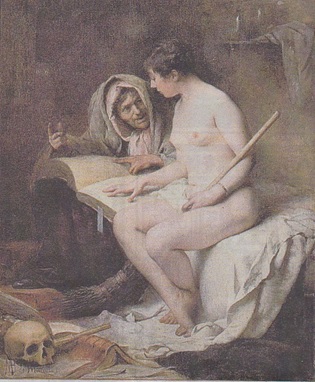
Figure 2.1 "War" or peace? Corruption or order? The devil's lesson
Louis-Maurice Boutet de Monvel "Lessons before the Sabbath"
1880, Nemours Museum
ⓒRMN-Grand Palais/René-Gabriel Ojéda/distributed by AMF
This paper can be downloaded from the link below.