Chairman of the World NGO Peace Ambassadors Council,
Chairman of the Nagasaki Council for the Promotion of the Japan-Korea Tunnel, Katsuyuki Kawaguchi
The Belt and Road Initiative (the Land and Maritime Silk Road Economic Zone) was the most notable initiative in Chinese diplomacy in 2015. The UK and Germany announced their intention to join the Asian Infrastructure Investment Bank (AIIB), followed by other European countries. Shortly after, it was decided that China and Pakistan would jointly promote an economic corridor, and the Belt and Road Initiative began to move forward.
"World history is a battle between land and sea," said Carl Schmitt, a leading German political scientist in the early 20th century. Indeed, the "battle between land and sea in the 21st century" is being waged between the Pacific Alliance (Pacific Rim Economic Zone), a Pacific alliance centered on the US side, with a T-shaped axis connecting Japan, Taiwan, the Philippines, Indonesia, India, and Australia, and the Eurasian Continental Alliance (Silk Road Economic Zone), centered on China and Russia. China is undoubtedly at a critical economic turning point. However, the Spratly Islands are located at the intersection of the horizontal and vertical axes of the T, where the US side is at its weakest point.
The tunnel will be a crucial link between the Korean Peninsula and the two geopolitical camps. Looking at it this way, it's easy to see how valuable the tunnel is, both from a geopolitical perspective and in terms of creating an economic frontier.
Following the Asian Infrastructure Bank (AIIB), which provides funding for infrastructure development in the Silk Road Economic Zone, China is increasingly taking the lead in establishing a financial order in Asia. The aim is to strengthen financial institutions within the region and prevent the Asian currency crisis that occurred in the late 1990s. China is leading a new organization called the Asian Financial Cooperation Association, which is calling on other countries to join. (As of March 2016)
The construction of the China-Pakistan Economic Corridor (Figure 3.1), part of the "Land and Maritime Silk Road Economic Zone," reflects China's historical fear of the sea and its desire for a sea corridor. A total of approximately 5.5 trillion yen will be spent by 2030 to build a major artery of roads, railways, power grids, and pipelines along a distance of approximately 3,000 km from Kashgar in China's Xinjiang Uyghur Autonomous Region to the port of Gwadar in southwestern Pakistan. The Silk Road Fund of the Asian Finance Institute will make its first investment in the development of hydroelectric power plants along this China-Pakistan Economic Corridor. China has agreed with Pakistan to lease Gwadar Port for 43 years. This corridor bypasses the Strait of Malacca in Southeast Asia, which is a potential strait that could be blocked in the event of an emergency. This land-based country has paved the way for a maritime corridor. (See Figures 3.1 and 3.2, from the Mainichi Shimbun.)
China relies on the Middle East and Gulf countries for 80% of its crude oil imports, and the construction of a land route from Kashgar to Gwadar will enable it to avoid the Strait of Malacca, which is under U.S. military control. In addition, a pipeline linking the port of Kyaukphyu in Myanmar and Kunming in Yunnan Province was completed in January 2015.
Saudi Arabia, China's largest crude oil importer, has expressed its support for the Belt and Road Initiative, a modern-day Silk Road economy, and is said to have signed a total of 14 agreements, including cooperation between oil companies, cooperation in the construction of next-generation nuclear reactors, and the establishment of a framework for counter-terrorism.
In addition, China has agreed to build a high-speed railway in Iran, as shown in Figure 3.2E. Furthermore, ministers from both countries have signed 17 memoranda of understanding (MOUs) aimed at strengthening relations across a wide range of fields, including politics and the economy.
In an increasingly complex trade environment, collaboration is more effective than competition. Collaboration in complex systems has the potential to create collective synchrony within diversity, a phenomenon that is ubiquitous in the swarm behavior of living systems.
The arena for international trade negotiations has shifted from multilateral trade agreements such as the World Trade Organization (WTO) to regional trade agreements such as the Trans-Pacific Partnership (TPP). However, reaching an agreement in trade negotiations has become much more difficult than it was in the 1990s, due to growing public skepticism toward globalization and free trade. Trade agreements expose certain industries to intense competition and force them to contract, which is a greater concern in countries with weaker economies.
The Earth has become a complex system, and negotiations are becoming increasingly complex. While many tariffs have already been lowered, negotiation areas are expanding to include environmental standards, labor regulations, and even government procurement. Each country has its own cultural and political priorities, making negotiations not simple tariff negotiations but a complex adaptive system.
Overcoming these difficulties and realizing a trade agreement requires strong political leadership. However, looking at the current state of American politics, it seems that many politicians are advocating "economic isolationism." Republican presidential candidate Trump has called for the scrapping of all trade agreements and the creation of trade barriers. José Mujica (former president of Uruguay) has warned the Japanese people not to seek growth, but to seek happiness.
As the movement to prioritize trade liberalization at the regional level among countries with strong economic ties gathers momentum around the world, the argument of Andrew Khan, former CEO of UK Trade and Investment, is noteworthy in that it puts into practice Huxley's saying, "In order to do what is right, we must learn what is true."
"In the world of trade, the idea that 'one side wins, the other side loses' is nothing short of economic ignorance. We need politicians who believe that 'free trade creates mutual benefits.'" This means that trade that does not create mutual benefits is not free trade. And isn't this the same as the teachings of Ninomiya Kinjiro?
In the name of globalization, everything about us is being controlled by it. According to Mitsuharu Ito and Eiichi Shindo, American capitalism has become a "new financial state" and transformed into "financial securities capitalism, where money begets money." This leads to a vicious cycle of self-exploitation, where workers work longer hours as their wages fall. While globalization allows money to easily cross borders and citizens pay taxes, capitalists who monopolize the world's wealth seek to increase their wealth infinitely by manipulating tax havens and other tax evasion methods. Instead, as a different form of "capitalism and collecting," could we not realize "optimal designs to stabilize the sense of unfairness that disrupts social order, and global environmental systems design theory" through "emergence," or in other words, "group synchronicity"?
When populist policies that fail to understand the growing complexity of society are combined with popularity, it leads to further confusion and a vicious cycle. Democracy has two aspects: it seeks to realize the identity of the right to govern and the right to be governed, and it also represents resistance that challenges the government. Even if "inaction" such as the Iraq War is justified in the name of democracy, it is not good to allow it to cover the whole picture. Therefore, the path Japan should take is to bridge the gap between land and sea nations.
As a "battle" begins between the land kingdoms of China, Russia, Turkey, and Germany and the maritime nations of the United States, Japan, the Philippines, and Australia, the "construction of a Japan-Korea tunnel," which symbolizes a "form" of "cooperation" rather than war or competition, seems to be the best policy for peace and economic development for the peninsula nations of South Korea, North Korea, and Japan, both geopolitically and in terms of creating new economic frontiers. This would enable the advancement of a global vision that includes energy production under the "Global Environmental Systems Design." Wouldn't investing in this satisfy capitalists? Money circulates everywhere.
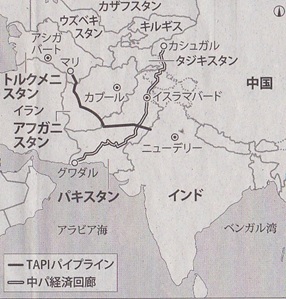
Figure 3.1 China-Pakistan Economic Corridor (Land and Maritime Silk Road)
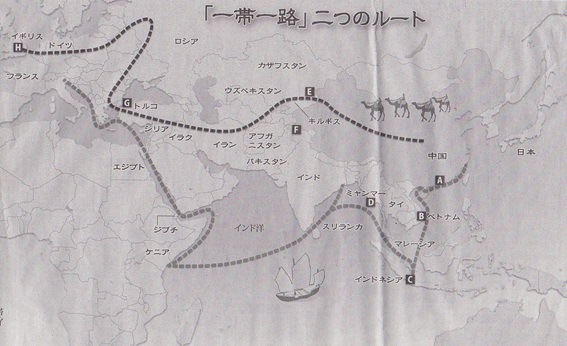
Figure 3.2 The Belt and Road Initiative, a land and maritime Silk Road economic zone
This paper can be downloaded from the link below.