The Road to Peace - Global Environmental Systems Design Theory (Building an Autonomous Decentralized Control Society)
Chairman of the World NGO Peace Ambassadors Council
and Chairman of the Japan-Korea Tunnel Promotion Nagasaki Council
For Japan to survive in the future, it is essential to create a culture of science and technology. And if we export this to the many countries suffering from global disasters, we will contribute to world peace.
Recently, the frequency of abnormal weather events such as earthquakes, tsunamis, mountain eruptions, heat waves, floods, landslides, and global warming has been rapidly increasing. In response to these events (which could become major disasters once they occur, resulting in great losses of human life and economic losses), Japan is proposing to the Ministry of Education, Culture, Sports, Science and Technology and the Ministry of Economy, Trade and Industry that disaster prevention and regeneration technologies be developed as "cultural technologies" to deal with these future phenomena.
Another serious problem facing the planet is the disparity caused by the one-sided "collection" of all things and money, in other words, the "semi-biological imbalance on Earth." Market fundamentalist economic theory, in a nutshell, seeks to "create a uniform environment in which money is collected from a diverse environment," leading to the same behavioral homogenization as "financial collection." From the perspective of complex adaptive systems theory, such a world would lead to biological decline and ultimately to "catastrophe." When a complex system loses its diversity, the crisis becomes fatal, just like desertification . A typical example of this is the economic collapse of 2008, which symbolically expresses the idea that "the Earth is finite" (On "Perspectives," I, II, III, Katsuyuki Kawaguchi, "World Peace Studies," 2016).
Barring solar system anomalies, meteorite impacts, or nuclear war, the Earth's demise would likely occur if the aforementioned climate change were to progress slowly and be met with repeated, sudden, shocking disasters. Until then, Earth will live its life to the fullest, imagining a fitting end before quietly disappearing. Artists may think so. However, a Kyushu man, a warrior from Tsushima, Nagasaki Prefecture, who fought a man-made catastrophe with over 200 cavalry against a massive Yuan army of 100,000, and was killed in battle, would not think so.
The effects of economic policy become apparent in a relatively short period of time, but the effects of education policy, including technology improvement policies, take a long time to appear and are not immediately apparent. As a result, course corrections are rare. The succession of politically driven education reforms and financial centralism pose great risks. The Ministry of Education, Culture, Sports, Science and Technology and the Ministry of Economy, Trade and Industry in particular need people who can master science and technology. Children are turning away from science and technology, and poverty is on the rise. In this situation, Japan, and indeed the world, will only sink further. We have moved from an era in which profits could be distributed to an extremely difficult era of negative interest rates.
Although this is normally a research and development project undertaken by the Ministry of Education, Culture, Sports, Science and Technology, a research team from the Japan Coast Guard's Marine Intelligence Department conducted research into cutting-edge fundamental design data for cultural science and technology and published their findings in the British scientific journal Nature. The results are the result of 10 years of data collection and analysis on a shoestring budget. It is said that "unlike Europe and the United States, the true strength of the Japanese economy lies in small and medium-sized enterprises," but it is these "small, on-the-ground organizations that make their own decisions based on facts " that offer more hope for the future than large corporations or centralized organizations.
For the first time in the world, we have revealed the distribution of strain accumulated in the bedrock plates on the seabed in the expected epicenter of the next major earthquake, the Nankai Trough megathrust earthquake.
Mega-earthquakes occur at the boundary where the oceanic plate subducts beneath the land plate due to minute seafloor movements. Strain accumulates on the land plate as it is pulled in, and an earthquake occurs when the bent upper plate attempts to return to its original state. The research team installed observation equipment at 15 seafloor locations between Shizuoka and Kochi prefectures, within the predicted epicenter, and used an observation vessel to accurately determine the location to investigate crustal deformation on the seafloor. As shown in Figure 6.1, analysis of data from 2006 to 2015 identified "strong strain zones" accumulating approximately 5 cm of strain per year in the Enshu Nada Sea, off the Kii Peninsula, and off the southern coast of Shikoku. These "strong strain zones" extended southwestward from the epicenter of the predicted Tokai earthquake and the 1946 Nankai earthquake with a magnitude of 8.0.
Once this strain data and strain rate distribution, as well as data on "active faults" and seafloor data that affect the propagation and amplitude of the earthquake source, are accumulated, it should be possible to use this comprehensive superposition theory to estimate the amplitude or estimated time of the next earthquake based on simulation tests using the parameter method.
(1) Availability and safety design of Japanese nuclear power plants
Of Japan's 54 nuclear power plants, the only measurement data available is the "bearing capacity" of the earth's surface, and some of these plants are built on active faults. This is a stark difference from the long-standing deception of the nuclear safety myth that "ignorance is bliss." While nuclear power plants in France , the United States, and South Korea have operating rates of over 80%, I hear that Japanese nuclear power plants average 63%, with some even reaching 29%.
Japan is a country prone to volcanoes and earthquakes, so this is inevitable. In this situation, the Minister of Economy, Trade and Industry keeps repeating on television the sweet words, "Nuclear power plants are base load plants." The president of TEPCO keeps telling the field, "Increase the operating rate." The world's energy production is now an autonomous, decentralized, distributed energy utilization system, yet they have no understanding of intelligent design.
Ever since the Ministry of Economy, Trade and Industry was given the name "Economics," it has been swallowed up by the economy. This is the cause of children turning away from science and technology, child poverty, and confusion in corporate management. It was Japan that established the term "engineering," which combines science and technology. The character "工" in "engineering" represents a shape supporting the heavens. We watch over it with a prayerful feeling.
Japan's shield tunneling technology is rated as the best in the world, as exemplified by the Anglo-French Tunnel (a joint venture between Kawasaki Heavy Industries and Mitsubishi). The technology that allows safe tunnel excavation can also be used as evacuation shelters, waterways, human routes, and material supply routes, and can also be considered a tool for social development and "disaster prevention technology." If used properly, it can be used for disaster prevention, transportation, and safety, and I have never heard of a tunnel being damaged by an earthquake.
The International Highway Foundation is conducting a survey of the seismic zones on the seafloor near the planned sea passage for the Japan-Korea Tunnel. According to the foundation's president, they are conducting ultrasonic surveys of the seafloor 1,000 meters deep at 20km x 5km grids (squares) and creating a map of the distribution of active faults (Figure 6.2). They have introduced an experimental vessel equipped with a water gun system and have spent 1 billion yen over 10 years to collect seafloor data.
Needless to say, with such basic design data, it will be possible to design long tunnels safely.
Although basic design data for the subsurface of the seabed is being collected through efforts by those on the ground, events suggesting the possibility of earthquakes and eruptions in onshore volcanic zones, which are being discussed as site conditions for new nuclear plants, are little known to the general public.
(1) Active faults and strain distribution lurking around us (focusing on the Kumamoto earthquake)
There are over 2,000 active faults across Japan. Takuya Nishimura of the Disaster Prevention Research Institute at Kyoto University used GPS (Global Positioning System) to confirm that the epicenter of the Kumamoto earthquake, including its aftershocks, was in an area prone to the accumulation of ground strain. Strain accumulates when the ground is constantly subjected to compression and tension.
When the rock mass can no longer withstand the pressure and is destroyed, an earthquake occurs. Figure 6.1 (b) also shows the distribution of active faults, but no active faults have been found in Tottori and Miyazaki, where strain has accumulated and strong earthquakes have occurred. In Kumamoto, active faults and strain zones coincide. This teaches us that we need to pay attention not only to active fault zones, but also to strain accumulation when considering disaster prevention measures such as the probability of earthquakes.
According to research by Kimio Kamoshida, the probability of dying in a traffic accident within the next 30 years is approximately 0.2%. The probability of being killed or injured in a fire is also approximately 0.2%. So what about the probability that major active faults across the country will cause a major earthquake?
For the northern section of the Futagawa Fault Zone, which experienced a high-magnitude earthquake in the Kumamoto earthquake, the Earthquake Research Promotion Headquarters announced that the probability of active fault activity within the next 30 years was 0.9%. While the figure itself may seem low, 0.9% is four to five times higher than the probability of a traffic accident or fire, which is a serious problem. Observation data clearly shows that the damage and destruction to buildings and surrounding areas above the active fault was severe. Kumamoto Prefecture, relieved by the low figure, has been promoting the attraction of businesses, but given that it had no experience of a major earthquake, it was reassuring and regretful when the results were as they were.
What's interesting is the relationship between active faults and roads. In areas where active faults are shifting, rocks rub against each other, weakening the rocks, and rock dust accumulates, making them susceptible to erosion. As a result, linear valleys are created, which have been used as highways since ancient times.
The "Mackerel Highway" connecting Wakasa and Kyoto is one of them, and it runs along the Hanaore Fault Zone. The Chugoku Expressway is said to run along the Yamazaki Fault Zone, and the Shikoku Expressway is also said to run along the Median Tectonic Line Fault Zone.
Active faults are common in Yamagiwa, a basin. According to Professor Emeritus Takashi Nakata of Hiroshima University, public facilities such as schools and hospitals tend to be clustered near active faults. This may be the reason why large buildings such as schools and roads suffered so much damage.
Is there any way to utilize the beauty, spirituality, and potential (power of magma) of Mount Fuji? Mount Fugen in Unzen, Mount Ontake in Kiso, Mount Mihara, and Mount Kuchi-Erabu have erupted one after another, and Mount Asama and Mount Sakurajima continue to erupt.
We don't know when Mt. Fuji will erupt. If it does erupt, the damage would be immeasurable. We propose that the main design objective be to "establish a method to prevent eruptions" from volcanic eruptions, and that the gases emitted be used to power "high-efficiency gas turbines for combined heat and electricity generation," or, if steam is used, to generate "geothermal power," thereby creating a long-term regional revitalization strategy of "preserving cultural heritage through energy production and increased safety" (Figure 6.3).
This is because the fusion of science, technology, and art will lead to the creation of a new "cultural technology." In short, we will generate power by "exhausting gas" from volcanic mountains that are at risk of erupting. Gas turbines are suitable as a distributed energy source because they do not require water and are lightweight and powerful.
Japan's "shield tunnel boring technology" is the best in the world. By using monitoring and this "shield tunnel machine," work can be done safely.
Matsunaga Yasuzaemon, the electricity guru, has suggested, "Don't rush into nuclear power generation. Japan has world-class hydroelectric power generation." This pumped-storage hydroelectric power generation technology is the most suitable for Japan, as it can actually produce and store energy. Japan is a land of water, so it creates energy by circulating water. This should be done as a public project. There is no need for lithium-ion batteries, and energy storage is also possible. The Ministry of Economy, Trade and Industry has not promoted either this or geothermal power generation.
Above all, we need to equip elementary school students, who are full of curiosity, with knowledge of and preparation for natural disasters. Before teaching them English, we need to make them realize that Japan is this kind of country. There is no need to make "children" learn the language of a country that does not have a phrase like "losing is winning."
First, we need to show people the actual sites of the disaster. By visiting the sites, people can see which houses collapsed and which escaped damage. This will stimulate people to move away from science and technology and foster the spirit of intelligent design.
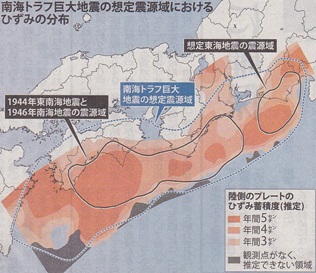
Figure 6.1(a) Nankai Trough megathrust earthquake
Earthquake Source Sea Plate Research Survey (Japan Coast Guard Intelligence Department 2016)
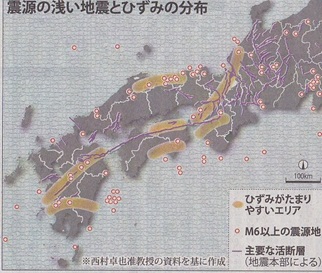
Figure 6.1(b) Distribution of land strain measured by GPS
Examples of earthquakes of magnitude 6 or greater (Iida 2016)

Figure 6.2 Geological survey of the straits and surface areas throughout Tsushima, Iki, and Karatsu
〈2009〉
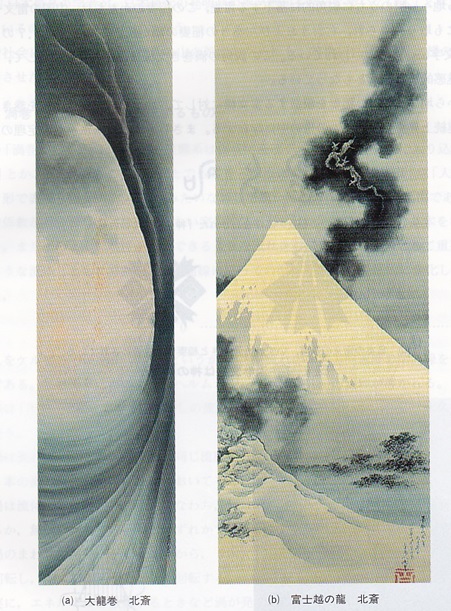
Figure 6.3 Hokusai's The World as Seen from Inside the Great Tornado and the Flying Dragon Calling the Whirlpool Over Mount Fuji
Hokusai tried to convey the sublimity and energy of Mount Fuji to the world
From "Research into the Expression of Human Inner Sensibility"