The Road to Peace - Global Environmental Systems Design Theory (Building an Autonomous Decentralized Control Society)
Chairman of the World NGO Peace Ambassadors Council
and Chairman of the Japan-Korea Tunnel Promotion Nagasaki Council
In "The Trump Phenomenon and Democratic Politics," Shincho 45, May issue, Saeki Keishi declares that "democracy is a political system that has fallen into the arrogance of humanity trying to satisfy its own desires beyond its bounds," and goes on to say that the Trump phenomenon "must be accepted as what democracy is all about." Far from being a good match, democracy and capitalism can sometimes have a negative "synchrony."
Reviewer Kazuo Mizuno writes, "Trump is the 21st century version of Chancellor Olimbales, who tried to halt Spain's decline in the early 17th century. However, as the wheels of the times begin to turn, they will crush any regressive policies to smithereens.
This is the lesson of history." My sense of crisis is that there are no "people" in the political and bureaucratic communities in Japan who understand science and technology. Blinded by the success of being a technology-based nation, we have neglected science and technology . The reason is that, with the exception of the privatization of the Japanese National Railways (led by Doko Toshio of the Keidanren), there has never been a successful example of a large-scale state-led project.
The world (Earth) has become so "wrong" due to the combination of science and technology and the economy, and there is no other way to repair it than through science and technology.
In today's complex society, the political and bureaucratic communities are even more required to master science and technology in order to address the above issues, which are fundamental to the construction of the Global Environmental Systems Design Theory. The
cause of the major failures of state-led large-scale projects thus far is that politicians have left policy decisions entirely to unprofessional bureaucrats, who do not understand science and technology. Bureaucrats do not do things that have never been done before. Or rather, lack the creativity or are unable to do so.
The guiding principles of science are released to the world through inventions and discoveries, but "technology" is the process of elevating them into "things" or "systems" that contribute to society. This is intelligent design. Even if we understand the guiding principles of "how to do it this way," they will not become "things" unless we integrate them with the technology (called peripheral technologies) to realize them.
To begin with, there is no common understanding between the mass media and the political and bureaucratic communities regarding the difference between "science" and "technology," and that "things" and "systems" are not determined by "high technology" but by "minimum technology ." As a result, mistakes are often made regarding the adaptability of science and technology to society. This decisively distorts the perception of "authenticity."
Russia's Khrushchev said, "Politicians are not afraid to build bridges where there are no rivers." This is similar to Caesar's saying, "Men see only what they want to see," and this is where the "demon of corruption" can take advantage, as expressed in Montvel's "Lessons before the Sabbath" (Figure 2.1).
Economics and science and technology have long been compatible. For example, "financial engineering" has been used to develop theories for accumulating money, and physicists have joined Wall Street and developed "high-frequency trading" information devices for stock and margin trading, focusing solely on financial accounting. The very premise is flawed, and it feels like Shylock in The Merchant of Venice, who uses information solely for the purpose of making money. This is enough to make one wonder if this is true economics. Strategies for buying and selling stocks even a millionth of a second faster than competitors are being implemented, creating an "information processing world" beyond human control. I would like to return to this topic at another opportunity.
Current economics does not express reality. Because "collecting" is a nonlinear phenomenon, existing economic theories do not realize that unpredictable things can occur. As can be seen from stock price movements, when stock prices are predicted, investors buy and sell stocks based on that prediction. If many investors buy and sell stocks based on this prediction, the prediction itself will affect fluctuations in stock prices.
This kind of interdependent relationship is called a "nonlinear or dependent relationship." In other words, the collection of gold and its price are not independent but dependent, so a linear relationship does not hold. When nonlinearity exists, prediction is, in principle, nearly impossible. In intelligent design, this unpredictability is called deterministic chaos. This is the reason for moving away from traditional analytical-centered academic systems and developing the idea of "complex adaptive systems" as they are (On "ways of looking at things," (II) Katsuyuki Kawaguchi, "World Peace Research," 2015).
Everything increases linearly at first, but eventually profits saturate and plateau. The same is true for intelligence curves. Just as there are limits to the Earth, there are limits to everything. Let's talk about a jet engine that successfully challenged this "limit." The limiting point was a turbine rotating in a gas flow at 1,570°C, which exceeds the critical temperature (melting point) of superalloys. The clearance between the tips of the turbine blades and the casing was 0.5 to 0.7 mm, and the time from start to full load was 2 to 3 minutes. Unless all of these design conditions were met, it would be impossible to rise to an altitude of 10,000 meters in this time.
Moreover, a 1m length of metal will expand by 1mm if there is a temperature difference of 100°C, so even a low-temperature steam turbine takes a day to start up, which shows how much effort is put into starting a jet engine.The rapid start-up technology that safely maintains the blade tip clearance at 0.5 to 0.7mm until the maximum temperature of 1570°C is truly a miracle.
Turbine blades are "internal cooled" by high-pressure air from an axial compressor through their complex internal flow passages. After impingement cleaning, the air passes through small, approximately 0.5 mm film-cooling holes on the leading and trailing edges, and a film of air covers the entire blade, protecting it from high-temperature gases of up to 1570°C. The surface temperature of the blade reaches 900–950°C. Without cooling to this temperature, the melting point of superalloy materials is below 1400°C, making it impossible to ensure a 10,000-hour lifespan. What would happen if a foreign object were to enter the intake air of an axial compressor and clog the 0.5 mm holes in the turbine blade? The hot gas, exceeding the melting point, would strike it, sending it straight to heaven. This truly life-threatening work of art, or rather, the artist's impression, is shown in Figure 7.1.
In high-temperature rotating bodies, where the components are designed to their limits, it is essential that the technological level of all components is consistent . Even if the radius of curvature at the base of the turbine blade where it fits into the disk is just a little small, stress concentration can cause the blade to fly off. Looking at it this way, it is clear that in mechanical design with comprehensive technology, the value is determined by the component technologies that do not meet the standard.
Using high-tech technology naturally increases costs. Therefore, the structure should be kept as simple as possible, and the component technologies should meet a passing standard of 65 points or higher. This allows replacement at the end of the designed lifespan, enabling circulation in line with the economic system. This is the essence of intelligent design (optimal design). The same is true for politics. If there is anything in life that does not meet the standard, it should be brought up to standard and brought into harmony with the whole.
If even one "technology" falls short of the standard, it will lead to a breakdown. Under severe operating conditions, the margin up to the limit can suddenly drop below the standard. The core meltdown at the Fukushima Daiichi Nuclear Power Plant was a typical example of an "artificial error" in which this "defense-in-depth design" did not function.
As a countermeasure against unexpected accidents, when designing a new model, 20 prototypes are built, and each one is repeatedly tested under various operating conditions, start/stop, fuel, and other conditions until all accidents are eliminated. This is why jet engine development is so expensive, and developed through international collaboration . Safety design is the most important implementation item. I believe that this type of jet engine research and development is enough to convince us that "God's creation" and "man's creation" are one and the same. After all, it operates at gas temperatures that cause any metal to melt and flow.
As you can see, ultra-high-tech technology can lead to catastrophe if one step goes wrong. Unlike nuclear technology, which is "inherently dangerous," "limit design" itself means that it is a risk that we cannot afford. Is it possible to create a society where "redundancy design" becomes a little more commonplace?
Wall Street greed drives the economy and science and technology. The wealthy need to shoulder more of the burden to help others. If they do, they will find that their voices alone can make them into advocates. This will awaken collective intelligence and create collective synchronicity. This is surely how Jesus Christ and Nichiren were born. By transcending their human limitations, they became images and lights for ignorant people.
Kakuei Tanaka's "Theory of Remodeling the Japanese Archipelago" is in the same "direction" as his "Theory of Global Environmental Systems Design." Unfortunately, it lacked the methodology of intelligent design (optimal design theory) that integrated religion, art, and science and technology. In other words, it lacked a "sensibility" for "science and technology" as a real experience.
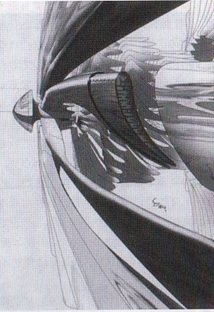
Figure 7.1 Organic turbine blade (Yamanaka 1999)
From "Research into the Expression of Human Inner Sensibility"

Figure 7.2 (a) André Malraux
The highly praised
"Nachi Falls"
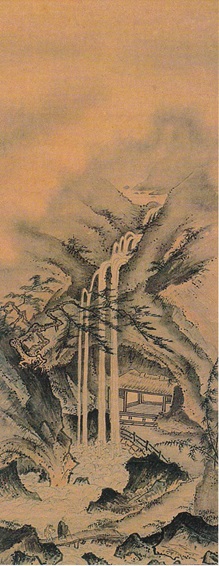
Figure 7.2 (b) Geiami's Waterfall Viewing
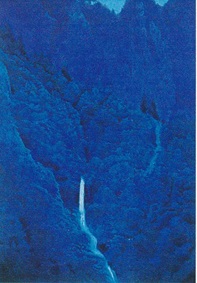
Figure 7.2 (C) Kaii Higashiyama's Evening Silence
~Harmony between Energy and Nature~ From "Research into the Expression of Human Inner Sensibility"