The Korea-Japan Tunnel Research Association (Co-chairs: Seo Eui-taek and Lee Yong-keum), a general incorporated association that conducts research and promotes Japan-Korea tunnels in Korea, celebrated its 10th anniversary and published "The 10-Year History of the Korea-Japan Tunnel Research Association" in Korea at the end of last year. The book includes a "Publication Launch Message" from our foundation's Chairman, Hirofumi Sato, which we introduce below.
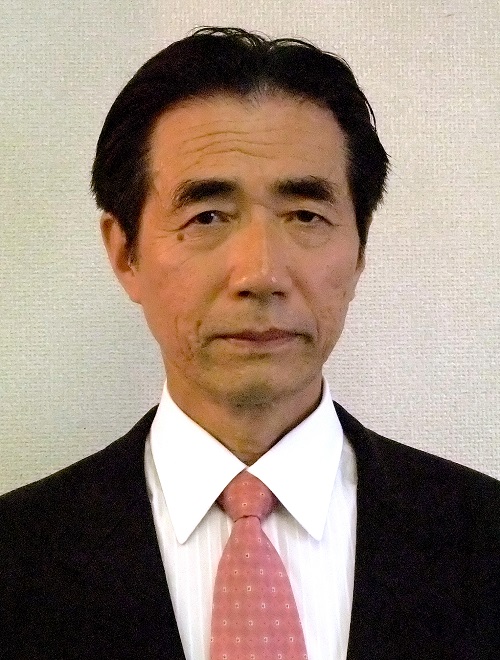
Hirofumi Sato, Chairman of the Board, International Highway Foundation (IHF)
Congratulations on the 10th anniversary of the founding of the Korea-Japan Tunnel Study Group. We offer our heartfelt congratulations. Today, there is growing national momentum in Korea for the promotion of the Japan-Korea Tunnel Project. We believe this significant achievement is the result of the hard work and dedication of all members of your study group over the past 10 years, as they have actively held conferences, lectures, seminars, inspection tours, and public relations activities in Korea. We express our sincere respect for your achievements and look forward to your continued success in the future.
I would like to take this opportunity to report on the IHF's past and future prospects.
IHF was established as a general incorporated foundation on January 9th, 2009, to take over and reorganize the international highway and Japan-Korea tunnel promotion project that has been running in Japan for approximately 30 years, in order to promote the international highway concept and the early realization of the Japan-Korea tunnel, which is part of the international highway concept, with the national consensus and approval of both Japan and Korea. This year, January 9th, 2019, marks the 10th anniversary of the foundation.
The purpose of the foundation is to promote the realization of a peaceful, unified world by contributing to freedom, peace, and prosperity in Japan, Asia, and the world through the "International Highway Initiative" proposed by Reverend Sun Myung Moon. In particular, in Japan, the foundation aims to promote the early realization of an undersea tunnel between Japan and Korea.
Specific activities include: (1) social education, surveys, and research related to the promotion and enlightenment of the International Highway Initiative; (2) international cooperation and subsidies for the construction, management, and operation of international highways; (3) research, development, design, construction, and management of undersea tunnels and bridges across the Japan-Korea Strait and the US-Russia Strait; (4) public relations and publications related to the International Highway Initiative; and (5) fundraising.
Our work over the past 10 years has included the following: We have secured approximately 1.2 million square meters of land for exploration inclines in three locations: Karatsu City, Saga Prefecture; Iki Island, Nagasaki Prefecture; and Tsushima Island. At the Karatsu site, we have been excavating an exploration incline since 1986, reaching a length of 580 meters. In Tsushima, we secured approximately 800,000 square meters of shady land for exploration in the Are area, laid a 2-kilometer access road, and excavated the incline entrance in 2014. We are currently preparing to excavate an exploration incline (approximately 1,300 meters) for horizontal boring. At the Iki site, we completed a 150-meter access road to the exploration incline in May of last year, and are currently preparing to excavate the entrance. Of particular note is our possession of topographical and geological survey data for the surface and Japanese side of the seabed on the proposed site for the Japan-Korea Tunnel. Over the past 30 years, we have already invested more than 10 billion yen in research, land acquisition, and public education projects, and we are continuing to work towards the early realization of the construction of the Japan-Korea Tunnel.
Furthermore, a national movement was launched to gain the support of the Japanese people, and in 2018, the "Prefectural Councils for Promoting the Japan-Korea Tunnel" were formed in all 47 prefectures, and in November of last year, the "National Council for Promoting the Japan-Korea Tunnel" was established. Preparations are underway to gain national approval for the construction of the Japan-Korea Tunnel by 2020.
・Japan-Korea government agreement reached to build a Japan-Korea tunnel by 2020
- Raising public awareness and promoting the movement through Diet members and experts
・Improvement of technical information related to the construction of the Japan-Korea Tunnel (route drawings, main tunnel design drawings, etc.)
・Start of exploratory inclined tunnel excavation in Tsushima for horizontal boring (approximately 5 billion yen)
The Japan-Korea Tunnel will bring economic benefits to both Japan and Korea, but it also brings greater political and cultural benefits. The material and spiritual benefits of Japan being connected to continental countries by land via the Korean Peninsula will be immeasurable. It will mean that Japan will no longer be an island nation, which will result in more active exchanges of people and culture, foster a sense of Asian community among the Japanese people, and serve as an opportunity to form an "East Asian Community."
For South Korea, it is expected that it will become a logistics hub in the East Asian region, leading to rapid economic growth. The Korean Peninsula could also become a cultural leader in East Asia, becoming the birthplace of a new civilization that combines Eastern and Western cultures.
As we are doing this for the noble cause of prosperity and peace for both Japan and Korea, and for the prosperity and peace of Asia and the world, we have no intention of prioritizing Japan's own interests. The era of only seeking our own country's interests is coming to an end. Unless we move away from a self-centered mindset to a global, or rather, a global perspective, our own country's prosperity will be impossible. To that end, we believe that Japan should take the lead in realizing the construction of the Japan-Korea Tunnel, even if it means sacrificing human resources and funds.
Japan should use its economic and technological strength to serve the world. By doing so, it will become a country that is loved and respected around the world. It will also help to atone for the past mistakes made during World War II, which caused great damage to neighboring Asian countries. Such attitudes and actions will naturally earn the trust and goodwill of other countries, and these will become a country's greatest asset. We are undertaking the International Highway project with the intention of leaving a legacy that we can be proud of for future generations.
Ideally, construction would be funded by the national budgets of both Japan and Korea, and operation would be privately run using fare revenues. Covering the enormous construction costs of at least 10 trillion yen through investments and loans from investors, banks, and other financial institutions, and then repaying them through operating income primarily derived from fare revenues, would be unrealistic, as it would be difficult to secure fare revenues that would match the costs. Because the Japan-Korea Tunnel is an international public property, as a national project between the two countries, we believe that state-led construction is essential.
The key to the success of the Japan-Korea Tunnel Construction Movement is to continue to tenaciously and continuously educate the public by using every possible means. To that end, we have completed the formation of Prefectural Councils for the Promotion of the Japan-Korea Tunnel in all 47 prefectures of Japan, and through regular lectures and seminars, as well as on-site visits to Karatsu and Tsushima, we continue to campaign at the grassroots level to widely appeal to all segments of the public about the necessity, value, and effectiveness of the Japan-Korea Tunnel.
However, what is needed from now on is to influence national leaders, religious organizations, the business community, etc., and to use various media and public relations outlets to appeal directly to all segments of the population, thereby shaping public opinion and expanding the base of national support.
Before construction of the main tunnel can begin, the pilot tunnel must first be excavated, and in addition to this work, there are many other issues that need to be addressed, such as legal arrangements and securing a construction budget. Even if all of this is completed and construction of the main tunnel can begin, it will take at least 10 years to complete, so 2030 will be the earliest and earliest time to reach the goal.
We hope that by strengthening our national movement and lobbying politicians, the construction of the Japan-Korea tunnel will be based on national consensus in both Japan and Korea, and that by 2020 an agreement will be reached between the Japanese and Korean governments, led by the leaders of Japan's Prime Minister Abe and South Korea's President Moon, to begin construction of the Japan-Korea tunnel, and that the dream project of building a Japan-Korea tunnel will progress to the stage where it can actually be realized.
2019 marks the 70th anniversary of the founding of the People's Republic of China, the year before the Tokyo Olympics, and is expected to be a time of turmoil both domestically and internationally, including the US-China confrontation. Japan-Korea relations are also at their worst. It is precisely at such times that our foundation must further deepen its ties with your organization and strengthen its efforts to realize the Japan-Korea Tunnel more than ever before in order to promote friendship and integration between Korea and Japan. We wish your organization continued success.