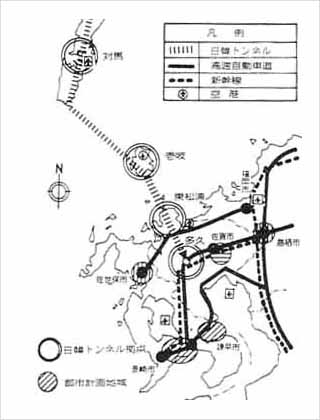
*Figure 1 (created by IHCC)
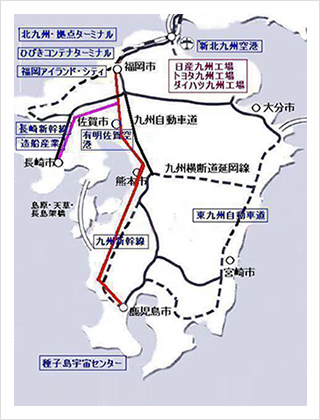
*Figure 2
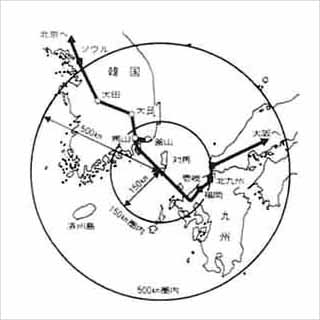
*Figure 3 (created by IHCC)
Area with a radius of 500 km centered on Tsushima
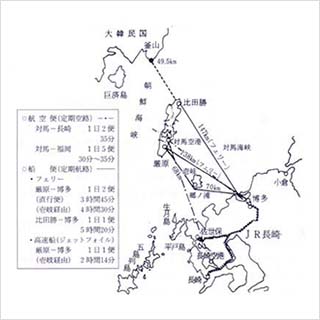
* Figure 4 (Map source: Tsushima Encyclopedia)
Tsushima Branch Office, Nagasaki Prefecture, 1999 edition

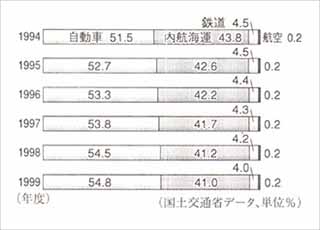
* Figure 5 (Ministry of Land, Infrastructure, Transport and Tourism data)
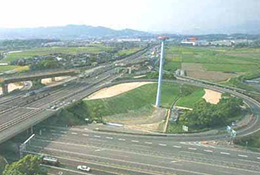
* Saga Prefecture Industrial Park (from the Saga Prefectural Government website)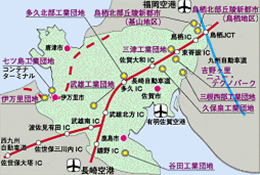
Tosu Junction is known as the Kyushu Cross Highway, where the Kyushu Expressway, which runs north to south, and the Nagasaki-Oita Expressway, which runs east to west, intersect in a cross shape.
As the Nagasaki-Oita Crossing Road was being developed, traffic volume at this junction gradually increased, and congestion (between Tosu and Chikushino) became noticeable. Therefore, construction work was carried out to build a bridge shaped like a bow above the junction for the rampway heading from Fukuoka towards Nagasaki, which is now completed and in operation. Preparations are
also underway to build a distribution business complex on approximately 70 hectares of land adjacent to Tosu Junction.
Japan Freight Railway Company (JR Freight) has decided to launch a new express train linking Nagoya and Kyushu by March 2006. In addition to reducing the number of stops to shorten the travel time, the company will set up a timetable that will allow shipments made in the evening to arrive early the next morning and be delivered to the shipper's factory in the morning. The company aims to capture the transportation demand of the Toyota Motor Group and parts manufacturers, which are expanding their production systems in Kyushu. Strengthening the line to connect the automobile industry clusters will increase profitability.
The express train will be a 20-car train, carrying a maximum of 500 tons. It is scheduled to depart Nagoya Freight Station around 6pm, travel via the Tokaido, Sanyo and Kagoshima Main Lines and arrive at Tosu Freight Station in Saga Prefecture at around 7am. The Nagoya-Kyushu line currently has two round trips per day, taking 13-14 hours, and shippers have complained that it is "inconvenient to use." The train will be operated with a locomotive that can reach a maximum speed of 110km/h, and will only stop at major stations in the Kansai region and Kitakyushu Freight Station, shortening the journey time to the 12-hour range.
-- (Nikkei Shimbun, July 4, 2005)
For details of the above, please see the industry section of the Saga Prefectural Government official website. [Click here for the Saga Prefectural Government official website]