If contaminated water is generated due to construction, relevant laws and regulations must be observed and appropriate measures must be taken to prevent water pollution in public water bodies, etc.
The causes of water pollution caused by shield construction are:
① Underground spring water
② Drainage by groundwater level lowering method
③ Generation of polluted water due to washing of various machines, vehicles, etc.
and so on. Contaminated water mainly requires removal of suspended solids (SS). Additionally, if cement or chemicals are mixed in, it is necessary to adjust the hydrogen ion concentration (pH) and pay attention to oil content.
①Water Pollution Control Law (see Articles 3 and 12) This law
stipulates standards for water discharged into public water bodies from factories and business establishments with specific facilities.
②The Sewerage Law (Article 12, see Articles 8-9 of the Enforcement Order)
regulates the discharge of polluted water into sewers.
③River Act (Refer to Article 16 of the Enforcement Order) This law
stipulates procedures for discharging polluted water (more than 50m3/day) into rivers.
④ Fisheries Resources Protection Act (see Article 18)
For the purpose of protecting fisheries resources, construction is regulated in areas specified by the law.
⑤Natural Park Law and Natural Environment Conservation Law (see Articles 13 and 25 of the same)
Regulates drainage within areas such as national parks and quasi-national parks.
⑥OrdinancesMany
prefectures or designated cities have established pollution prevention ordinances, sewage ordinances, waste disposal ordinances, fishing rights ordinances, etc., and construction wastewater may be regulated.
⑦Temporary Guidelines for Construction Work Using Chemical Injection Methods This provision
stipulates the selection, design, construction, and monitoring of water quality of construction methods necessary to prevent human health hazards and contamination of groundwater, etc. due to chemical injection methods.
Before construction begins, it is necessary to investigate the source of polluted water, its impact, its extent, related laws and regulations, regulatory values, etc., and carry out appropriate purification treatment before draining the water. In addition, the amount and quality of wastewater must be measured and reported in accordance with regulations and other regulations.
① System, water volume, water quality, status of water use, etc. of rivers etc. to be discharged
② Laws and ordinance regulations such as drainage standards, necessary procedures and notifications, etc.
③ Water quality and quantity of polluted water or waste sewage generated due to construction work etc.
④ Sludge treatment method
⑤ Land for installation of purification facilities, etc.
① Sediment the suspended solids
using a flocculant in a settling basin, sedimentation basin, or coagulation sedimentation tank.
②Sludge
is solidified by solar drying or mechanical dehydration.
③
Discharge the supernatant water from the directional water sedimentation tank or sedimentation layer.
④ pH
Adjust the pH of alkaline or acidic water before discharging it.
⑤ Oil content
The oil content in the effluent water is removed by floating or adsorption separation.
(Reference material: "Tunnel Standard Specifications - Shield Construction Method Established in 2006", Japan Society of Civil Engineers)
Environmental assessment
(environmental impact assessment)
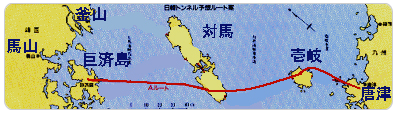
Overview of the Japan-Korea tunnel